
Nevada Release Records Explained
“Released” describes the end of one custody episode. It does not always mean that a person is free of all custody or supervision. A county jail may release someone on bond, on personal recognizance, for time served, after dismissal, or under a court order. It may instead transfer the person to the Nevada Department of Corrections, another county, federal marshals, or immigration custody. NDOC can release a sentenced prisoner to parole, mandatory parole, residential confinement, or sentence expiration. The disposition matters as much as the date.
A current roster is built to show who remains housed now. Once a person leaves, the name may vanish even though a booking, movement, court, parole, or release record remains. Nevada released inmates therefore cannot be found through one live list. The durable record belongs to the former custodian: a sheriff or city jail for local detention, NDOC for a Nevada prison term, the Bureau of Prisons for a federal sentence, or ICE for civil immigration detention.
Important: Disappearance from a roster proves only that the person is no longer displayed there. Read the actual movement description and check any receiving agency.
Nevada Custody Exit Types
Nevada records use distinct terms because the legal effect changes with the exit. Parole is supervised release before the full sentence ends. Probation is imposed by a court and may begin without a prison stay. Discharge usually marks completion of the controlling corrections term, while transfer or residential placement changes where custody is served. NDOC definitions also distinguish court-order release, mandatory parole release, and death in custody.
| Event | Meaning | Next record |
|---|---|---|
| Bond or court release | Local jail episode ends under court authority | Jail movement and trial-court file |
| Parole or MPR | Prison housing ends, but supervision continues | NDOC release, Board action, and NPP |
| Sentence discharge | Controlling NDOC term reaches its lawful end | Release event and discharge document |
| Transfer | One custodian hands the person to another | Sending movement plus receiving system |
| Residential placement | Housing changes while correctional status may remain | NDOC custody or supervision data |
That separation prevents a common error. A favorable parole action is a decision, not proof of a gate exit. A projected expiration date is an estimate, not a completed movement. A release to ICE is a handoff, not community release. Use the last dated event and preserve its official wording.
What Nevada Release Records Show
The county and state layers do not publish one standard form, but a focused request can seek the same core facts. Match the person with a booking number or NDOC Offender ID, then capture the event date, release description, authority, former location, and any destination. NDOC separates Demographic, Alias, Booking, Parole, and Release datasets. Those categories should not be merged.
| Field | What it establishes |
|---|---|
| Name and identifier | The record belongs to the intended person and custody episode |
| Release date and time | When the former custodian recorded the movement |
| Release description | Parole, discharge, court order, transfer, or another disposition |
| Releasing facility | Which jail, prison, camp, or placement ended the episode |
| Authority or order | The court, Board, sentence event, or agency basis |
| Destination or supervision | Whether another custodian or NPP should be checked |
The official NDOC offender-search form illustrates these separate search and download categories.
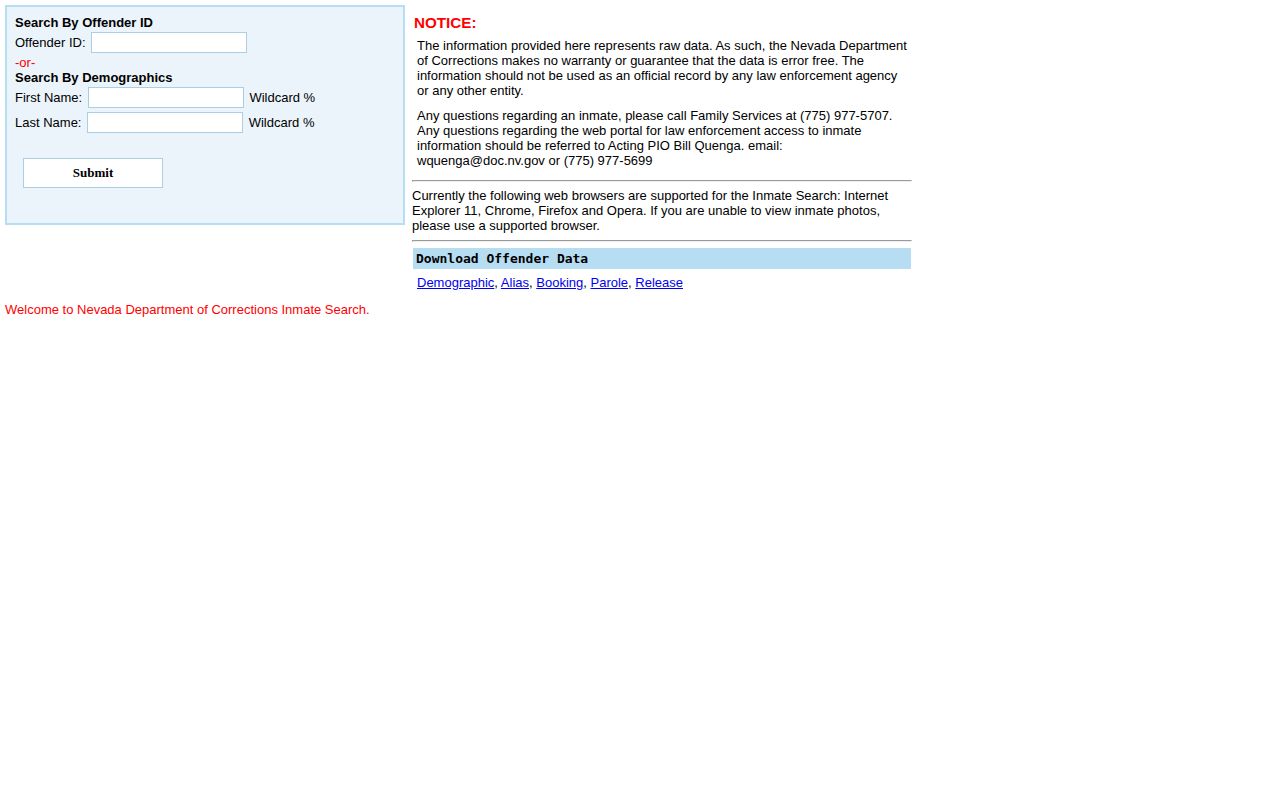
The form supports Offender ID or name searching, documents the percent-sign wildcard, and warns that the portal is raw data rather than an official record.
Request Nevada Release Records
NRS Chapter 239 is the Nevada Public Records Act. NRS 239.010 sets the general rule of access unless another law makes material confidential. Under NRS 239.0107, an agency generally must act by the end of the fifth business day by providing the record, identifying its custodian, citing a withholding rule, or giving written notice of when access is expected. That deadline governs the response, not the completion date of every large request.
- Identify the former custodian and the correct booking or offender number.
- Ask for existing records, including the actual release date, time, description, authority, and destination if maintained and public.
- Give a narrow date range and request electronic copies when practical.
- For a jail matter, use the county or city records office reached through the County Directory.
- For an NDOC term, use the NDOC public-record form or publicrecords@doc.nv.gov and keep the response.
NDOC’s form permits paper, electronic, certified-copy, or inspection requests. Its published schedule lists paper copies at 15 cents per page, a written estimate when expected cost exceeds $25, and prepayment after that threshold. Inspection is listed Monday through Friday, 8:00 a.m. to 5:00 p.m. Current terms should be checked before filing.
The NDOC public-record fee page shows the agency’s request mechanics and contact path.
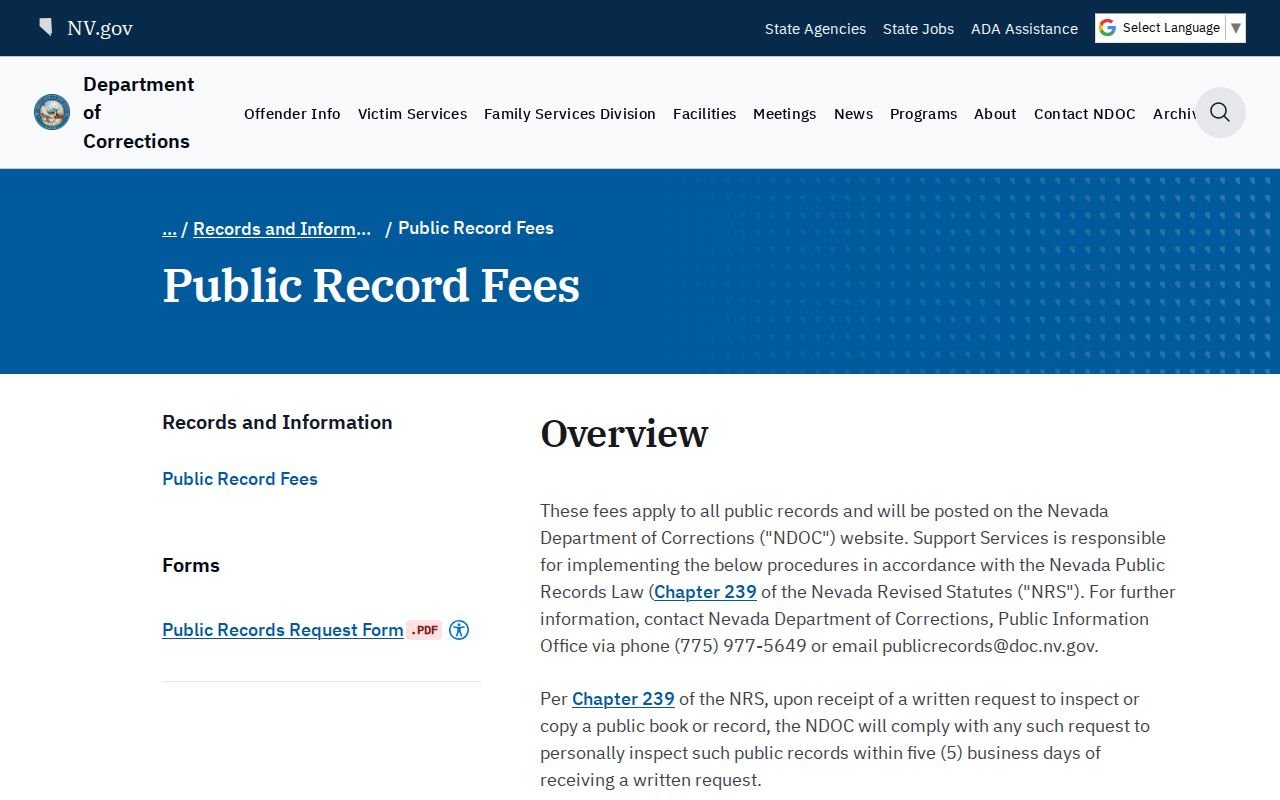
A precise request is easier to route than an open-ended demand for an agency explanation.
Nevada Sealing and Record Limits
Nevada’s usual adult remedy is record sealing under NRS Chapter 179, not a broad promise of expungement. NRS Chapter 179A also provides defined routes for correction of criminal-history information. A sealed, corrected, confidential, or redacted item may no longer appear where an older copy once did. Juvenile, victim, medical, and security-sensitive material can face added limits.
A booking image proves intake identity. It does not prove guilt, present custody, or release. No current Nevada-specific statute imposing an anti-pay-to-remove rule on commercial mugshot publishers was verified in the official NRS research. The safe route is the government custodian, the sealing process where available, and a correction request when the record is wrong.
Key Nevada law: NRS Chapter 239 governs public access, while NRS Chapter 179 governs adult record sealing.
Nevada Prison Release-Day Support
NRS 209.511 supplies a concrete statewide framework for a person released by expiration, pardon, or parole. The NDOC Director may provide needs-based money up to $100. The word “may” matters, and the cap is not a guaranteed payment. The statute requires suitable clothing and transportation costs to a residence in the continental United States or the place of conviction. It also addresses a photo identification card and reasonable DMV assistance under stated triggers.
The same law addresses appropriate transitional-living placement, a 30-day supply of prescribed medication, and benefit-enrollment paperwork under its timing and eligibility terms. These duties do not establish the hour someone will clear a prison gate. Release plans, approved residences, holds, transport, and NDOC processing still affect the actual movement.
The official text of NRS 209.511 supplies the release-day details.
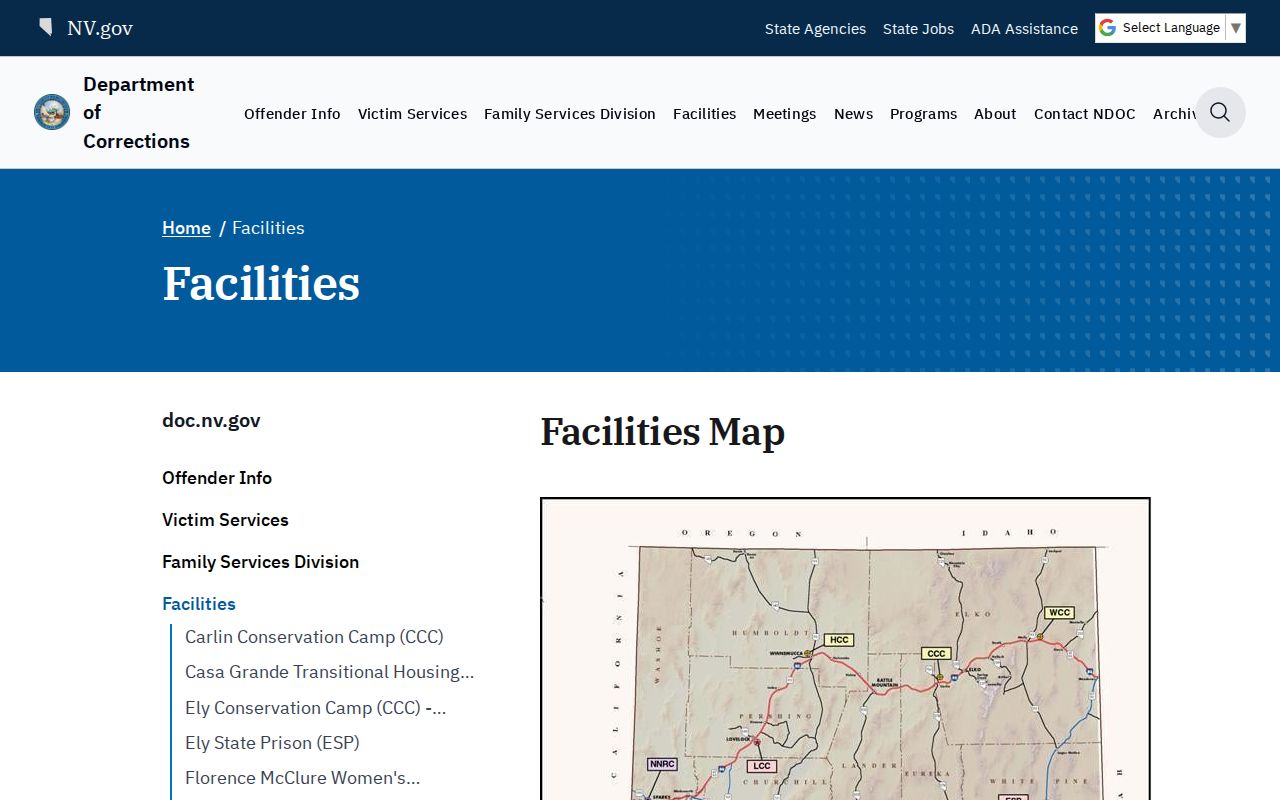
The NDOC directory also helps distinguish active prisons, transitional housing, camps, and historical facilities named in older records.
Nevada Release Trends by Date
NDOC’s FY2025 fourth-quarter report lists 4,248 monthly actual releases from July 2024 through June 2025, including 3,670 male and 578 female releases. This is a flow count of events. It is not the number of people who were free of supervision. A release can lead to parole or another placement.
The December 31, 2025 summary counted 329 people outside in addition to those in-house. Its older cohort series listed 5,963 releases in 2019, 5,270 in 2020, and 4,489 in 2021. The published decline should not be assigned a cause without more study. It does show why a point-in-time prison count cannot serve as a Nevada release archive.
The NDOC quarterly report archive keeps each dated statistical source.
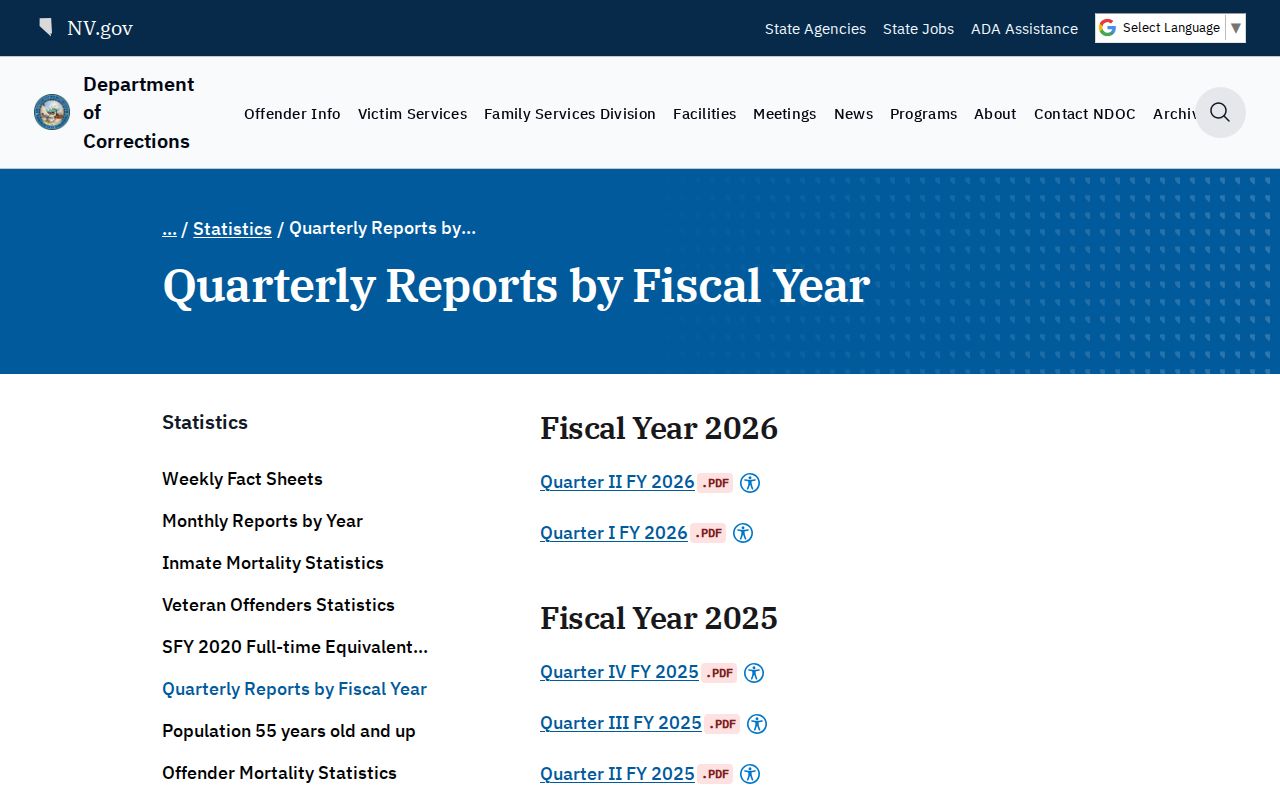
Readers should cite the report period because populations and release totals answer different questions.
Search Nevada Released Inmates
Start with the last known custodian. A state-prison case goes to NDOC. A county or municipal jail case goes to that local agency. A federal sentence goes to BOP, while an immigration handoff goes to ICE. Court records can identify the legal authority but may precede the physical exit.
- Confirm the person by full name, date of birth, and agency identifier where available.
- Read the last dated release or movement event, not just the current institution field.
- Follow a parole event to the Board action and NPP supervision route.
- Follow a transfer, detainer, or handoff to the receiving custodian.
- Request the existing movement or discharge record when the public fields conflict.
The official search can preserve discharged people. Live verification on August 12, 2026 found the institution label INACTIVE-DSCHREL for two examples, while a keyed release row used the description RELEASE FOR DISCHARGE. That observation proves some history remains searchable, but NDOC promises no fixed public retention period.
The NDOC released-result view shows why an exact agency label is stronger than a generic rewrite.
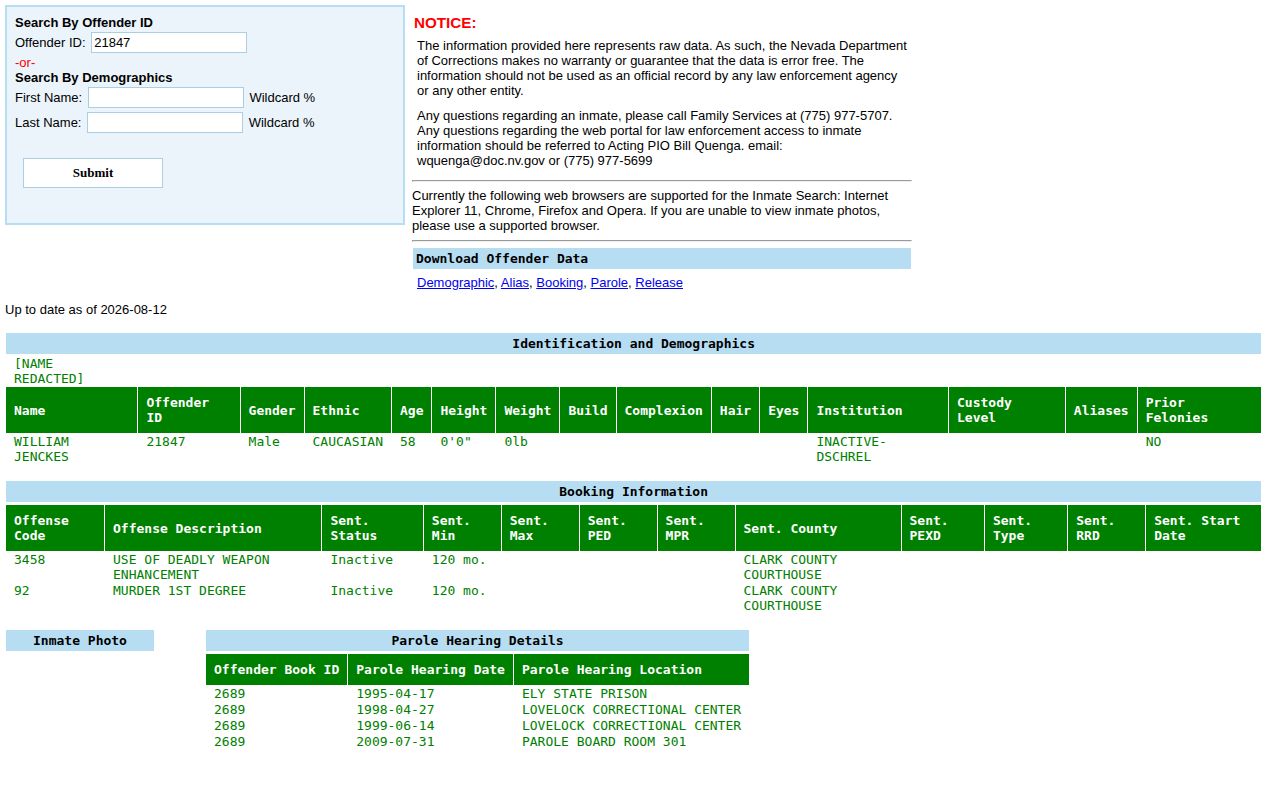
The release date and description should be joined to the correct offender and booking identifiers.
Nevada Courts and Physical Release
Nevada has no single public portal for all District, Justice, and Municipal Court criminal cases. The appellate ACIS system covers Nevada Supreme Court and Court of Appeals matters. Trial-court searches remain with the correct court, which can be found through the Nevada Judiciary directory. Court minutes may explain dismissal, bail, sentencing, revocation, or a release order, but the jail or prison movement establishes when the person physically left.
The Nevada appellate ACIS portal provides participant and case searching for its statewide appellate scope.
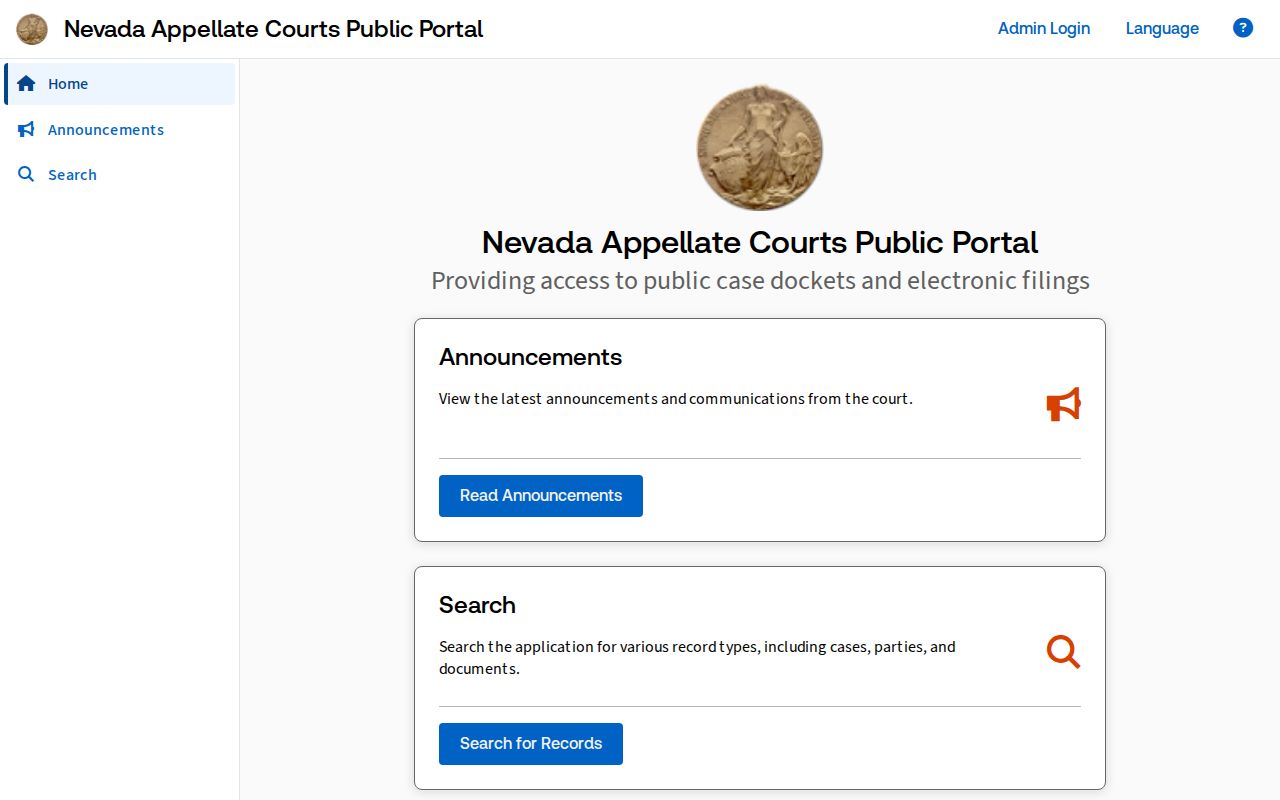
A trial matter may require a separate District, Justice, or Municipal Court clerk search.
Nevada Parole Decisions and Release
The Nevada Board of Parole Commissioners publishes monthly hearing schedules and separate Monthly Parole Board Actions. A schedule is a planning record. A grant can have a future effective date and remains subject to NDOC timekeeping, an approved plan, holds, and movement processing. A pardon or commutation follows Nevada’s clemency process and should not be inferred from an ordinary parole-action PDF.
The Monthly Parole Board Actions archive warns that end-of-month hearings may appear in the following report.
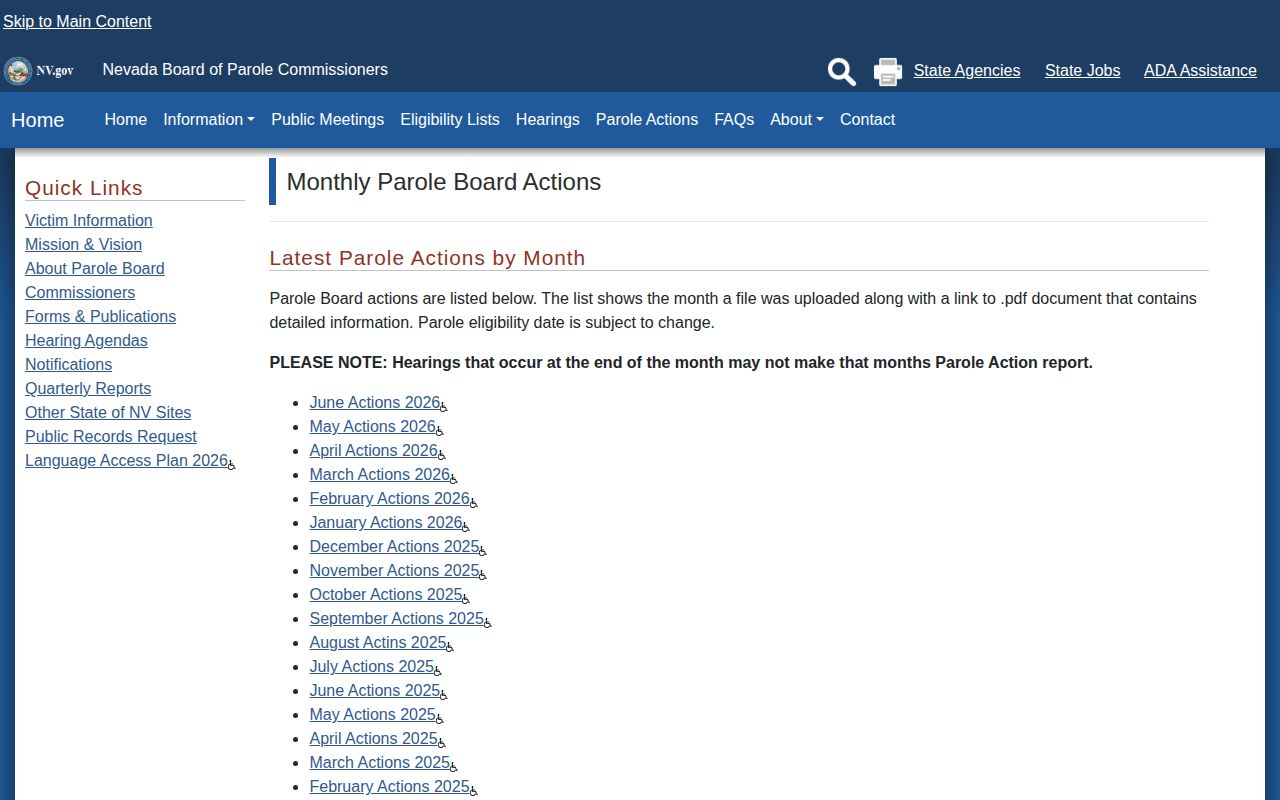
Search the relevant and following month, then confirm the actual NDOC release event.
Nevada VINE Is Now S.A.V.E.
NV S.A.V.E. replaced Nevada’s VINE search and notifications in August 2025. The Attorney General reported that S.A.V.E. began operating at midnight on August 28, while VINE search and notifications ended at 8:00 a.m. on August 29. Current action belongs at S.A.V.E., not in old PIN or app instructions.
S.A.V.E. is offender-based and can carry one registration across participating Nevada custody or supervision agencies. It offers free telephone, email, and text notices in English and Spanish, anonymous registration where offered, and blackout choices. Immediate release alerts override blackout settings. An alert is still a cue to confirm the event with the custodian.
The current NV S.A.V.E. search begins with offender matching and registration access.
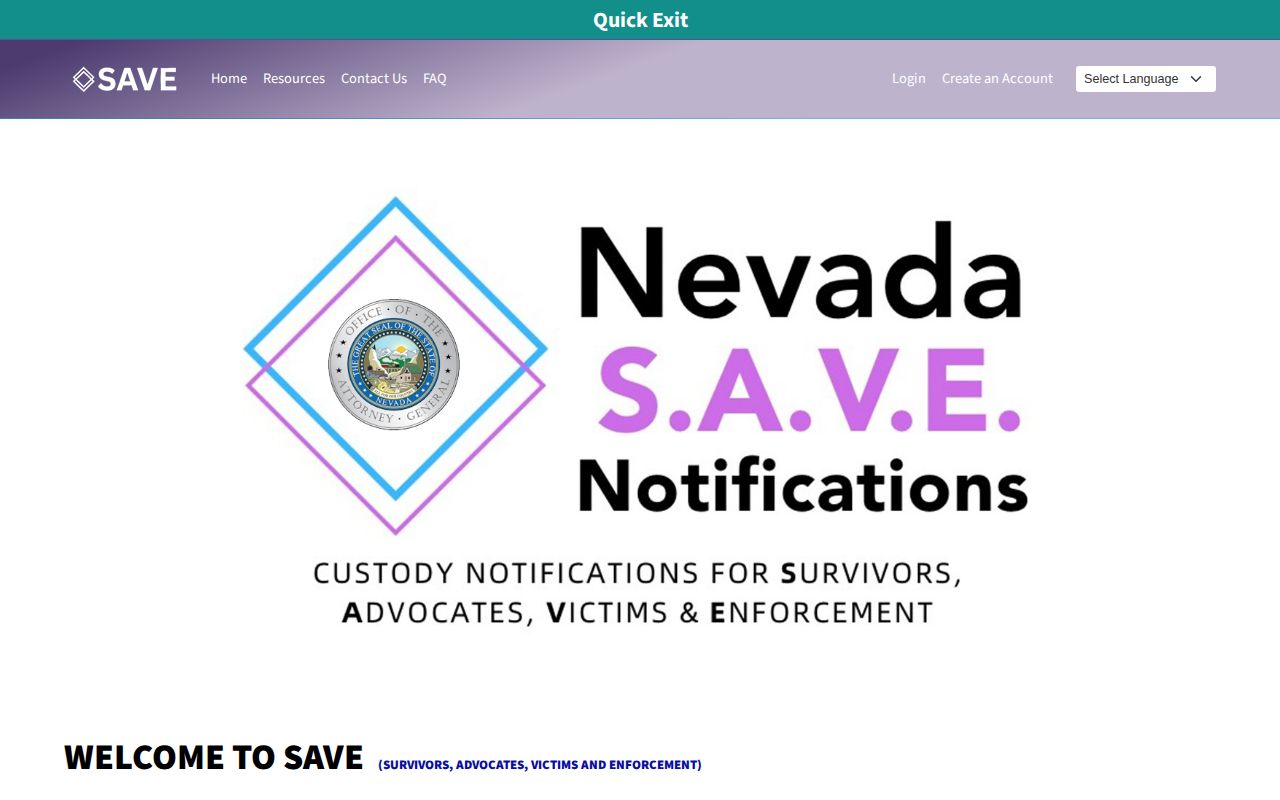
A no-result can reflect timing, spelling, an offline feed, or custody outside participating Nevada agencies.
Nevada Federal Release Checks
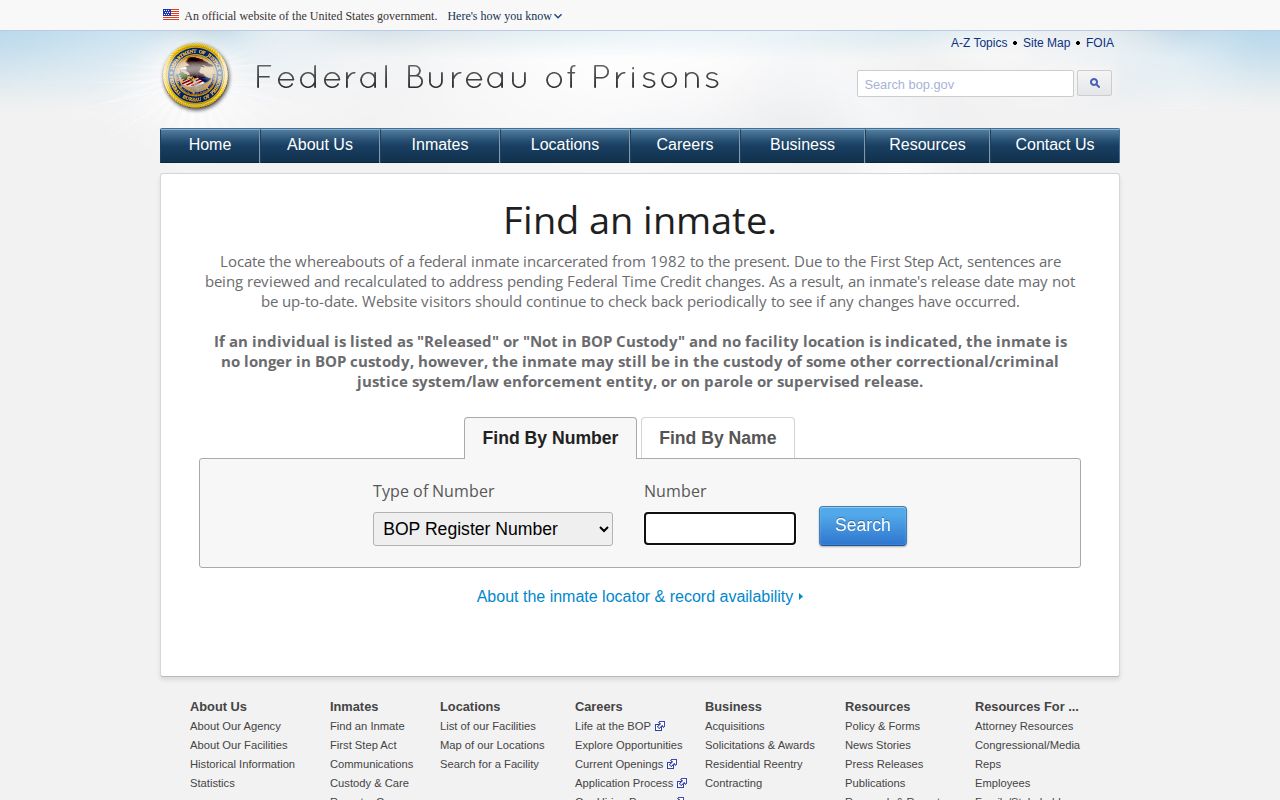
The BOP locator generally covers federal prisoners from 1982 forward and may retain a release date with “Released” or “Not in BOP custody.” That wording does not establish release from a Nevada jail or rule out another federal form of custody. Search by a federal number when known, or use name and demographic fields with care.
The Federal Bureau of Prisons Inmate Locator displays both number and name search paths.
Nevada Southern Detention Center is a private federal contract site, not a BOP prison merely because federal detainees are housed there.
Nevada Discharge Documents
Nevada law treats prison release, parole supervision, and discharge as separate stages with separate proof. The NDOC Release event supports the physical movement from a correctional placement. A Monthly Parole Board Action supports the Board’s decision. NPP can address the current supervision route within its confidentiality limits. At the end of supervision, NRS 213.155 requires an official document that records whether the discharge was honorable or dishonorable and states applicable civil-right restoration dates.
This evidence ladder matters when a search result merely says inactive. NRS 213.154 describes when an honorable or dishonorable discharge applies, and NRS 213.1543 provides a structured early-discharge recommendation route for some qualifying parolees. A person who has left prison may still be on parole. Someone whose supervision term has ended should have stronger proof than an old roster absence or a favorable Board decision.
If the discharge document was lost, damaged, or destroyed, NRS 213.155 permits the discharged person to make a written request to a court of competent jurisdiction. After verification, the court issues an order without a fee. The request is for replacement proof, not a way to alter the underlying custody history. A focused records request may also seek the existing NDOC release or movement entry, final sentence-computation record, and the date discharge became effective.
Question: Is “not in prison” the same as discharged? No. The person may be on parole, in another placement, or held by another authority until a release event and supervision record establish the later stages.
Nevada Custody Search Comparison
Each system answers a limited question. Use the source that matches the custody type, then reconcile its event with any court order or supervision record.
| System | Best use | Main limit |
|---|---|---|
| County or city jail | Local booking and actual movement | Separate custodian for each jurisdiction |
| NDOC offender search | State-prison release, parole, and discharge history | Raw data, not an official record |
| NV S.A.V.E. | Participating custody and supervision alerts | Feed timing and coverage vary |
| BOP locator | Federal sentence and reported release date | Not county, ICE, or every USMS contract case |
| Court record | Legal authority for release or sentence change | May not show physical exit time |
Question: Does parole mean the sentence is over? No. Parole ends prison housing under conditions, while discharge is the later end of the supervision term when the governing requirements are met.
Nevada County and Facility Routes
Local variation is structural. Clark County has county and municipal detention systems, while rural jurisdictions may use one jail, temporary holding, or beds in a neighboring county. The former custodian must be identified before a local release record can be requested. Closed NDOC sites can still appear in old files, but they are historical name keys rather than current custody contacts.
The County Directory routes all 17 Nevada jurisdictions to their local released-inmate sites. The Facility Directory lists county jails, municipal facilities, NDOC prisons and camps, the federal contract site, juvenile facilities, and historical institutions. Covered rows link to verified local pages; uncovered rows remain plain text so no page is invented.
Juvenile rows serve only as routing information. Public adult name-search instructions do not carry over to a youth facility because confidentiality and authorized-family or court procedures control those records. Contract housing also requires care. A county may place someone in another county’s physical jail, so the release request belongs with the custodian that made the movement entry. The directory lists that physical facility once under its home locality instead of treating each contract relationship as a new jail.