
Nevada VINE Is Now S.A.V.E.
Nevada no longer uses VINELink as its operational statewide notification service. The current official route is NV S.A.V.E., short for the Nevada Statewide Automated Victim Information and Notification Everyday system. The Nevada Attorney General announced that S.A.V.E. opened and started notifications at midnight on August 28, 2025. VINE registration was disabled that morning, and VINE search and notifications ended at 8:00 a.m. on August 29. An earlier proposed July date does not describe the final public transition.
The change matters when following old instructions. A page that tells a Nevada user to select the state in VINELink, install the VINE app, or enter a VINE telephone PIN is describing the former system. Those steps should not be used as the current path. S.A.V.E. is offender-based, so one registration can follow an offender across participating Nevada custody or supervision agencies. That differs from VINE’s older incident-based approach.
The official S.A.V.E. portal shows the current Nevada search and registration entry.
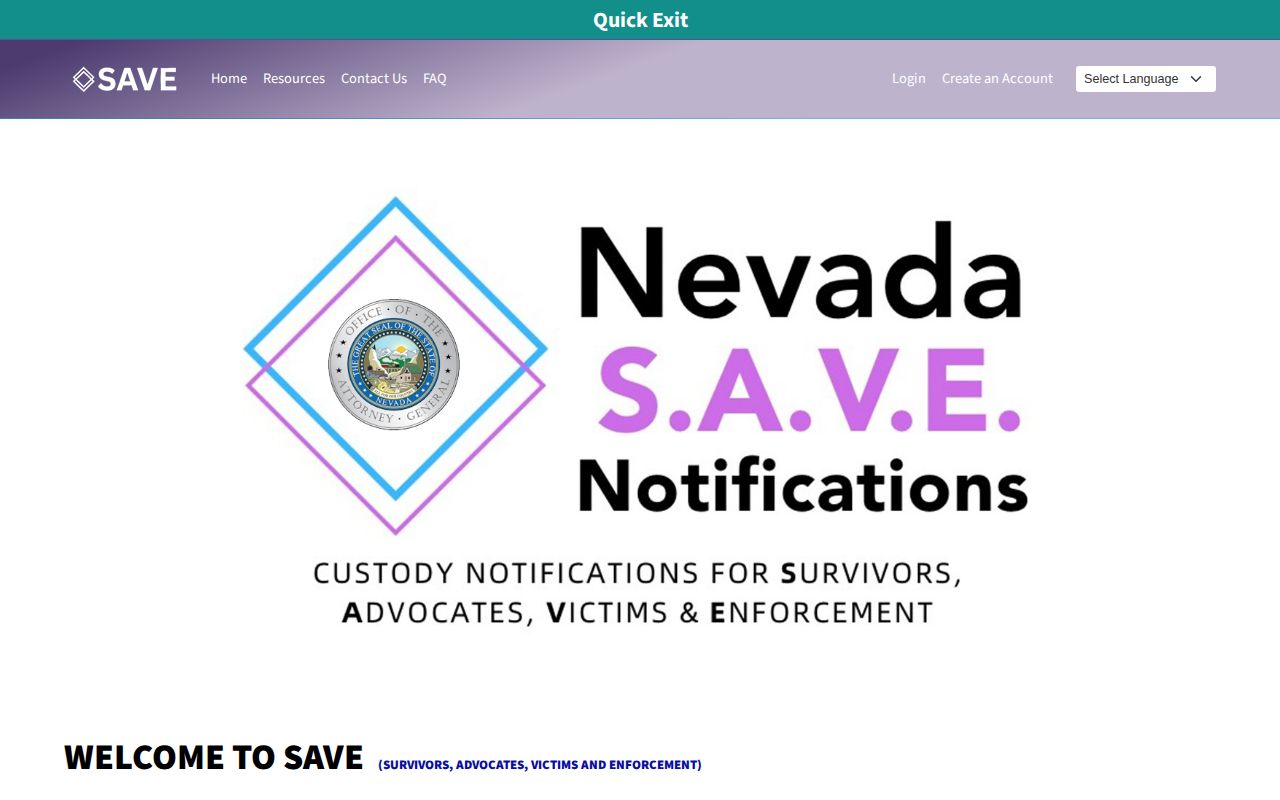
This screen is the right starting point for a new Nevada VINE inmate check, not an archived VINELink workflow.
Nevada Release Alert Coverage
S.A.V.E. receives information from participating Nevada custody and supervision agencies. That can include a person held by a local jail, a person in Nevada Department of Corrections custody, or a person whose record reflects supervision. Coverage is based on agency feeds. It is not one merged official case file, and it does not turn a custody event into a final legal conclusion.
A result must be read in context. “Released” can describe leaving one agency while another hold or transfer remains active. A supervision entry can mean the person left a facility but remains on parole. Parole is conditional release under state supervision. A transfer can move the person to another jail, NDOC, federal custody, immigration custody, or a correctional placement. None of those events is the same as completing every sentence.
A missing result does not prove release. It can reflect spelling, feed timing, an offline agency, a nonparticipating source, or a person outside Nevada’s system.
County custody is decentralized. Clark County alone has county and separate municipal detention systems, while rural counties may rely on one jail, short-term holding, or an outside-bed agreement. When the former local custodian is unclear, the Nevada County Directory routes the search to the county or Carson City source that maintained the event.
Search Nevada S.A.V.E. Records
Begin with the strongest identifier available. A full legal name may return several people, especially when a name is common. An agency or offender number can narrow the set. Partial-name search may help with an uncertain spelling, but it increases the need to compare the details displayed for each possible match.
- Open the official NV S.A.V.E. portal and choose the offender-search path.
- Enter the full name or permitted partial name or identifier, then complete the captcha.
- Review each candidate and compare available identifiers before selecting a record.
- Read whether the record describes custody, supervision, a transfer, or a release event.
- Note the agency, event wording, and update time, then verify the event with that agency.
A photo, when present, can help separate people with similar names. It is not release proof. Date of birth, agency identifier, listed custodian, and the sequence of dated events provide a stronger match. Do not force a match when key details conflict. Start again with a different spelling or contact the likely custodian.
Nevada Release Result Fields
S.A.V.E. is a notification and locator tool, not a certified Nevada release record. Its result can still answer several useful questions about one person. The exact fields depend on the source agency and current status, so a user should preserve the displayed terms rather than replace them with a broad claim that the person is free.
| Displayed item | How to read it |
|---|---|
| Name and identifier | Use these to distinguish the intended person from another match. |
| Custody or supervision | Shows the type of agency relationship reported by the feed. |
| Agency or location | Identifies the source to contact for confirmation. |
| Event or status | Read the actual label, including transfer or supervision terms. |
| Notification choices | Shows the channels available for later event alerts. |
The S.A.V.E. registration view illustrates the custody and supervision language along with available contact channels.
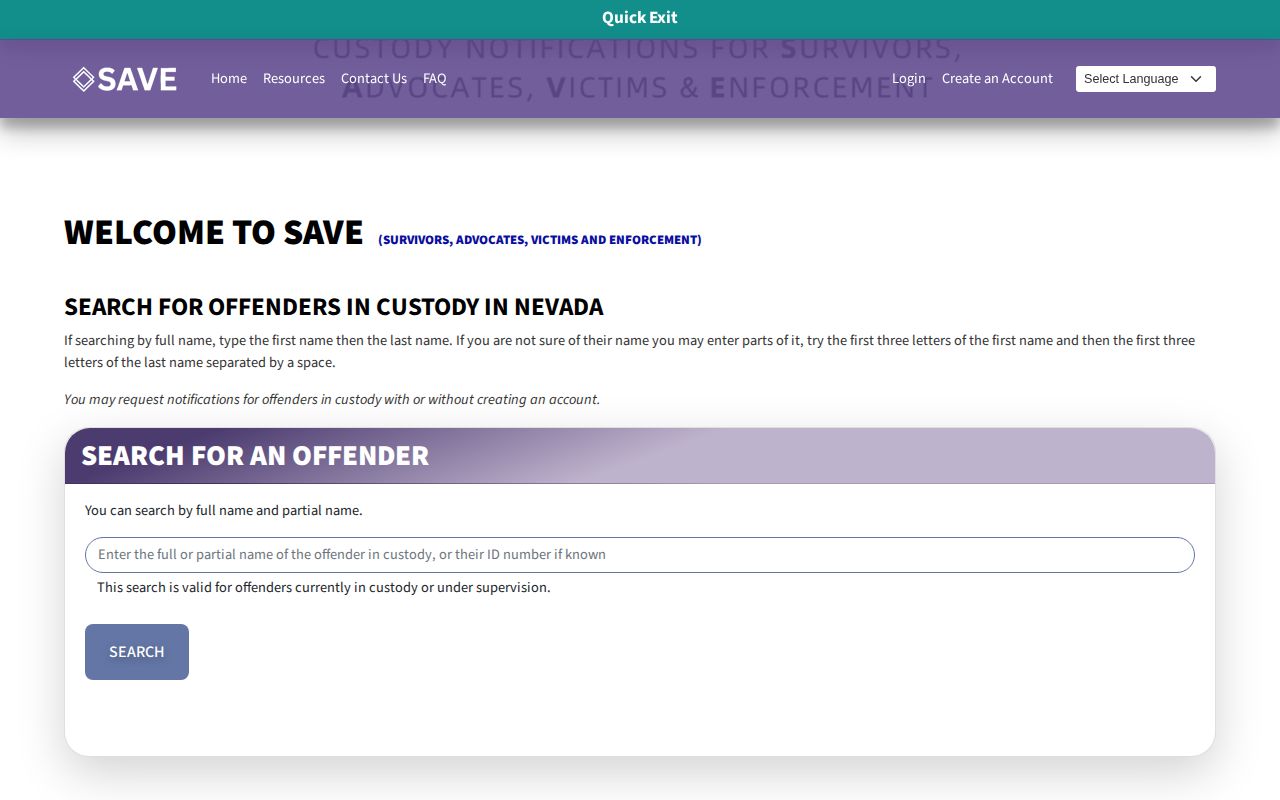
The wording helps separate a custody update from continued community supervision and lets the user choose how alerts arrive.
Note: S.A.V.E. information is a lead for verification, and NDOC says data it transmits is not audited before transmission or an official NDOC record.
Register Nevada Release Notifications
Notifications are free and available in English and Spanish. Nevada lists automated telephone, email, and text options. A person may create an account or use an anonymous registration where the portal offers it. The goal is to save the matched offender and selected events, not merely to save a broad name search.
- Open the matching offender record after checking the identity details.
- Select the events and notification channels offered for that record.
- Enter the required phone, email, or text destination and follow the on-screen confirmation process.
- Choose blackout preferences if desired, keeping in mind that release alerts are sent at once.
- Save the confirmation or account details needed to review, change, or end the registration.
Blackout dates can reduce some contacts during selected periods. They do not delay an immediate release alert. Help is available around the clock at 1-866-393-5445. That number supports the state service, but it does not replace the custodian when the question is whether a specific movement is final or official.
Nevada VINE Transition Gaps
Most existing VINE registrations transferred during Nevada’s August 2025 change, according to the Attorney General. App-only VINE registrants had to register again. Anyone who depended on the former app should not assume an old alert remains active. The practical check is to search the person in S.A.V.E., open the matching record, and confirm that the desired channels and events are saved there.
Agency connectivity also matters. The transition announcement warned that an offline entity could not send data. The same basic limit applies after launch: a statewide portal can only display the information supplied by its participating sources. A stale status may reflect a delay between the physical event, the agency record, and transmission. System availability can also interrupt a search or alert.
This Nevada deployment quirk is why S.A.V.E. should be treated as an alert layer. It can call attention to a change quickly. The former custodian’s movement entry or official release record remains the source for the actual date, time, disposition, and destination when those facts are maintained and public.
Verify Nevada Release Alerts
An alert answers a narrow question: the connected agency reported an event for the registered record. It does not explain every legal effect of that event. First compare the alert’s name, identifier, source agency, and event time with the saved registration. Then open the current S.A.V.E. record. If the event names a jail, NDOC, parole supervision, or another custodian, use that named source for the next check.
For a local jail event, ask for the actual release or movement entry. Useful fields can include the booking number, date and time, disposition, release authority, and receiving agency when maintained and public. Nevada’s Public Records Act generally requires an agency to respond by the end of the fifth business day by providing the record, identifying the proper custodian, citing withholding authority, or stating when access is expected. That rule concerns the response, not guaranteed completion of every request within five days.
For an NDOC parole event, use an evidence ladder. The Nevada Board of Parole Commissioners action shows the decision and any effective date. The NDOC Release event shows the physical movement from the correctional placement. The Nevada State Police Division of Parole and Probation can route a question about ongoing supervision, though statutory confidentiality limits what staff may disclose. Final discharge is a separate finding and can be documented under Nevada law.
Keep the wording exact when the sources differ. A Board grant can precede release planning. A court order can precede jail processing. An S.A.V.E. alert can arrive before a public agency screen refreshes. Recording the query time and each displayed label is more reliable than changing all of them into the single word “released.”
Confirm Nevada Prison Releases
For a person committed to a Nevada state prison, pair S.A.V.E. with the official NDOC search. NDOC accepts an Offender ID or first and last name and documents the percent sign as a wildcard. It separates Demographic, Alias, Booking, Parole, and Release data. Those categories should not be combined. A parole entry concerns conditional release and supervision, while a Release entry records a movement disposition.
The NDOC offender form shows the search fields, wildcard note, download categories, and the agency’s raw-data warning.
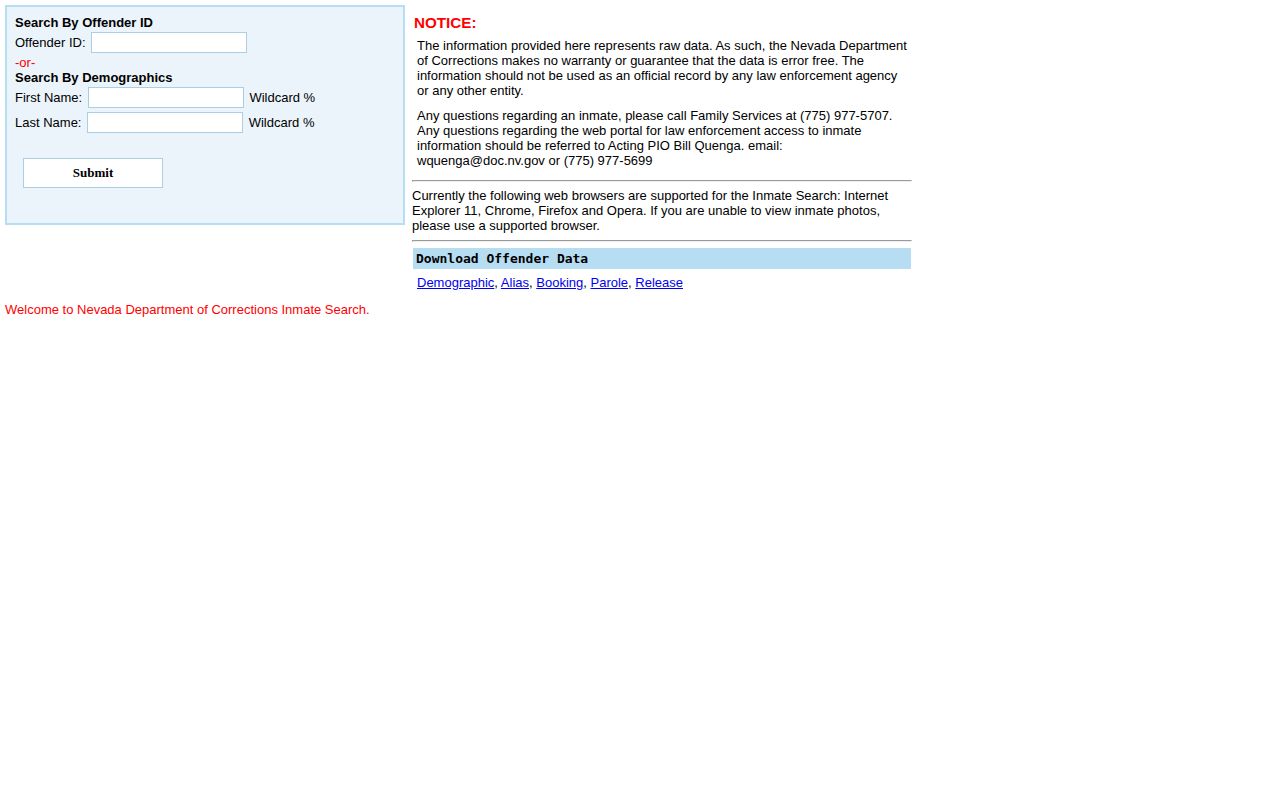
Use the Offender ID when known, then compare the release and parole events rather than stopping at the current institution field.
A historical result can remain searchable after discharge. Nevada research verified examples labeled `INACTIVE-DSCHREL`, with a keyed Release row showing a release date and `RELEASE FOR DISCHARGE`. That label proves a historical NDOC event for the matched record. It does not establish a fixed public retention period or rule out a separate duty in another system.
The official released-result capture shows the exact status and release labels used for confirmation.
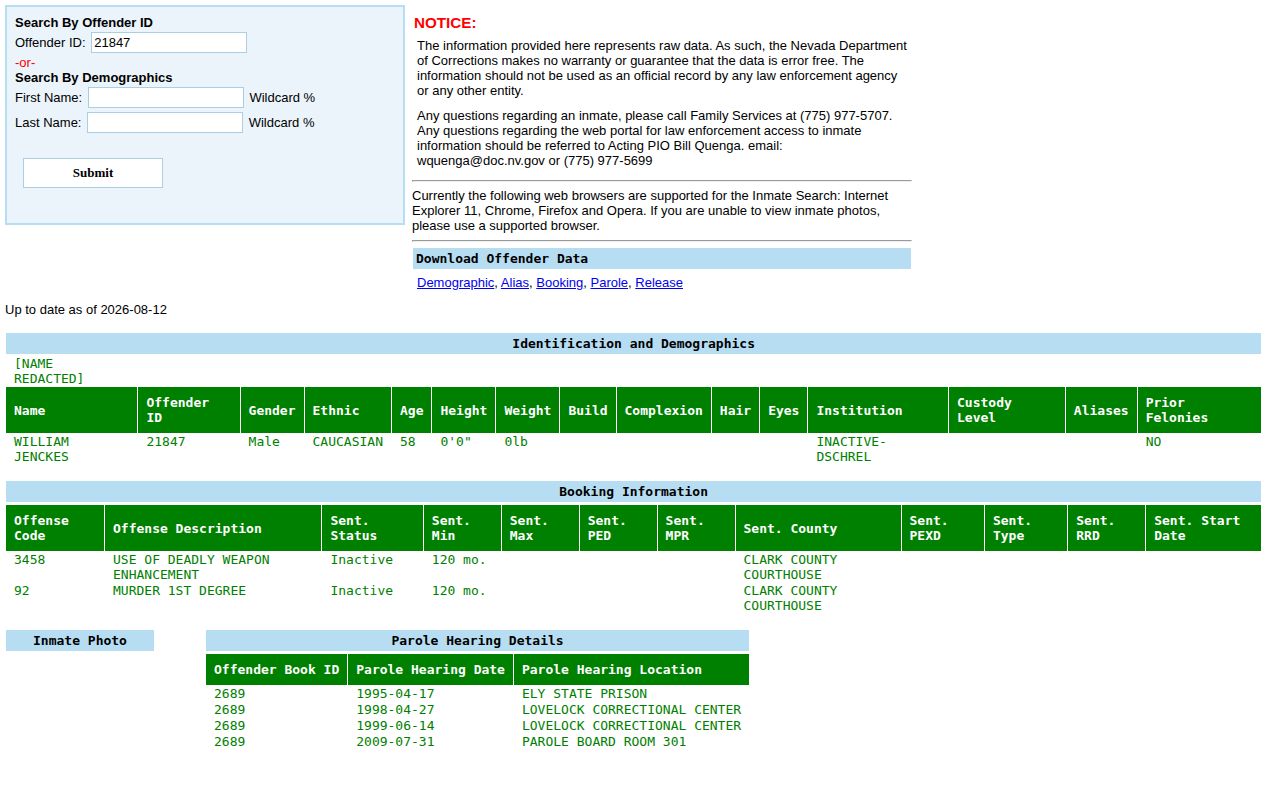
Copy the release date and description as displayed, then request an official record when the public data conflicts or formal proof is needed.
Federal and Nevada Release Limits
S.A.V.E. does not replace a federal search. For a federal sentence, use the Bureau of Prisons locator, which generally covers federal inmates from 1982 forward. A former prisoner may appear with a release date and wording such as “Released” or “Not in BOP custody.” The latter does not prove release from a Nevada county jail, nor does it rule out another form of federal custody or supervision.
The BOP Inmate Locator displays the federal number and name-search inputs.
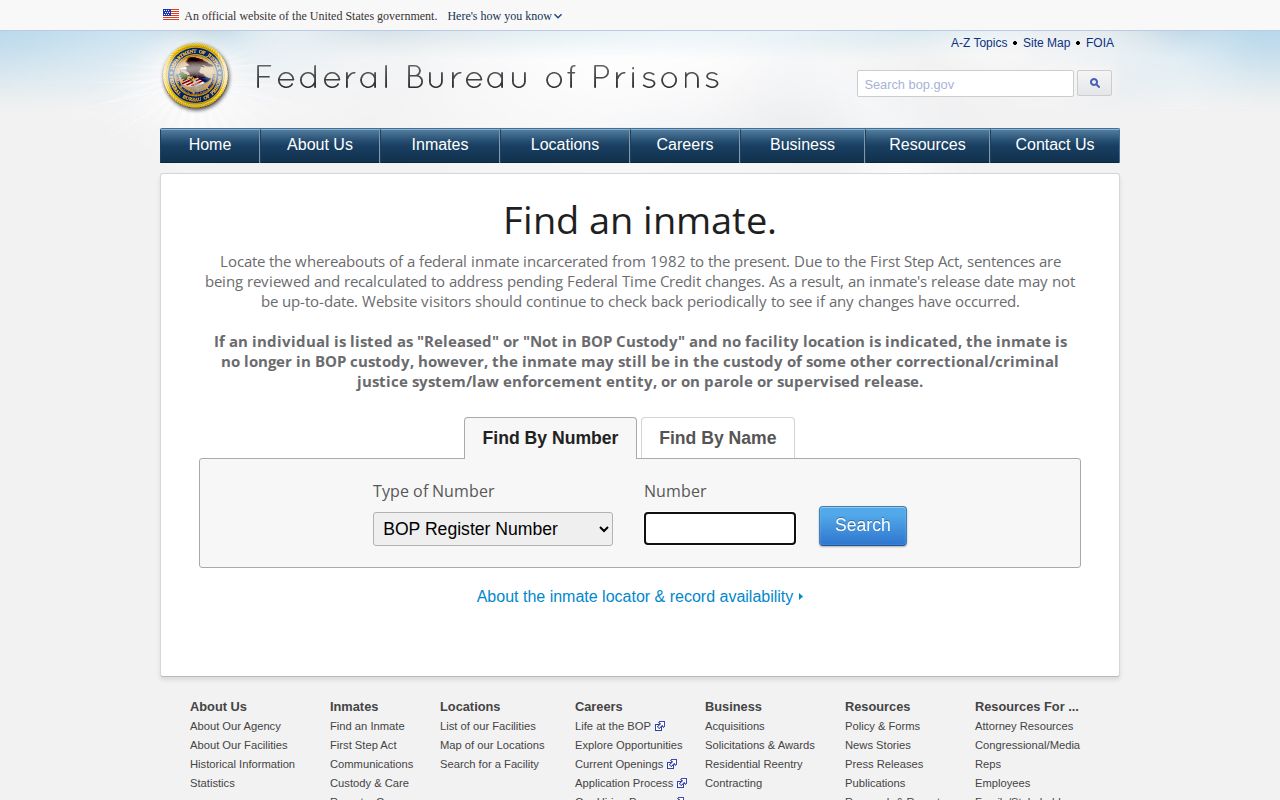
This separate interface confirms why a no-result in Nevada S.A.V.E. cannot settle a federal custody question.
Immigration custody is separate as well. A local or NDOC event saying “released to ICE” describes a transfer, not release to the community. Use the ICE locator with an A-number and country of birth, or the biographical search, then use the agency help path when a recent intake or transfer has not appeared. Juvenile information can be confidential and should follow authorized family, court, or agency channels.
For every system, an alert is the start of confirmation. Match the person, identify the reporting agency, preserve the event wording, and check the next custodian or supervisor when the record names one. That sequence distinguishes a Nevada release from a move between systems.